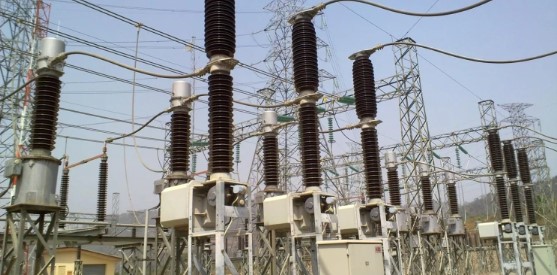

President Bola Ahmed Tinubu has directed all government ministries, departments, and agencies (MDAs) to apply existing laws to ensure a more practical and transparent sharing of electricity subsidy costs among the federal, state, and local governments.
Beginning with preparations for the 2026 budget, the President aims to ensure that the heavy burden of electricity subsidies is no longer borne solely by the Federal Government.
This directive was disclosed on Monday in Abuja by Tanimu Yakubu, Director-General of the Budget Office of the Federation.
Speaking during a training session for government officials, Yakubu explained that if any tier of government chooses to reduce electricity tariffs for its residents, that level of government must clearly outline how the intervention will be funded.
The objective, he said, is to ensure that subsidy costs are properly tracked and financed so they do not become “hidden debts” that undermine the power sector.
Yakubu described the policy shift as a move toward fairness, stating:
“It also means that if any tier of government chooses affordability interventions, the funding responsibilities must be clear, agreed, and enforceable. This is not punishment; it is alignment.”
He further explained that when every level of government bears its fair share of the cost, there will be stronger incentives to improve efficiency in the power market. He noted that the Federal Government will no longer be regarded as the sole entity responsible for absorbing the cost of artificially low electricity tariffs.
“In 2026, we will stop pretending that this bill can be left to the Federal Government alone, especially where the policy choice or political benefit is shared across tiers of government,” Yakubu added.
BusinessDay reports that electricity subsidy payments will be financed through the Power Consumer Assistance Fund (PCAF).
The PCAF is a government-supported funding mechanism designed to reduce electricity costs for economically disadvantaged and vulnerable households, making power more affordable amid rising tariff rates. The fund aims to expand energy access and strengthen the electricity sector through targeted assistance programmes rather than broad-based subsidies.
More than 18 states have established operational electricity regulatory agencies, while others are in the process of doing so.
The states include Lagos, Ondo, Osun, Ekiti, Edo, Delta, Bayelsa, Akwa Ibom, Cross River, Abia, Anambra, Imo, Kogi, Niger, Nasarawa, Plateau, Gombe, and Jigawa.
Beyond electricity, the President also issued directives on public project planning. He cautioned that a long list of uncompleted projects represents a “map of disappointment.”
For the 2026 budget cycle, all projects must be implementation-ready, with completed designs and clear financing and execution plans.
“A long list of projects is not a development strategy. It is often a map of disappointment. What citizens feel is delivery — completed roads, reliable power, functional schools, and working hospitals,” Yakubu quoted the President as saying.
To prevent a deeper debt burden, the President has also ordered a review of the rules guiding public expenditure. Yakubu told officials that MDAs must now justify every kobo requested, clearly stating how the spending aligns with fiscal rules, sustainability goals, and measurable outcomes for Nigerians.
“You will not only be asked what you want to spend. You will be asked how it fits the fiscal rules, how it affects sustainability, and what measurable results it will deliver,” he said.
The new approach means that the 2026 budget will prioritise completing a smaller number of high-impact projects rather than initiating numerous projects that risk abandonment.
Under the new framework, every funding request must demonstrate realism, alignment with national priorities, and value for money.